
General
How to Plan Your Pool Patio Layout in Connecticut
| Feb 17, 2026
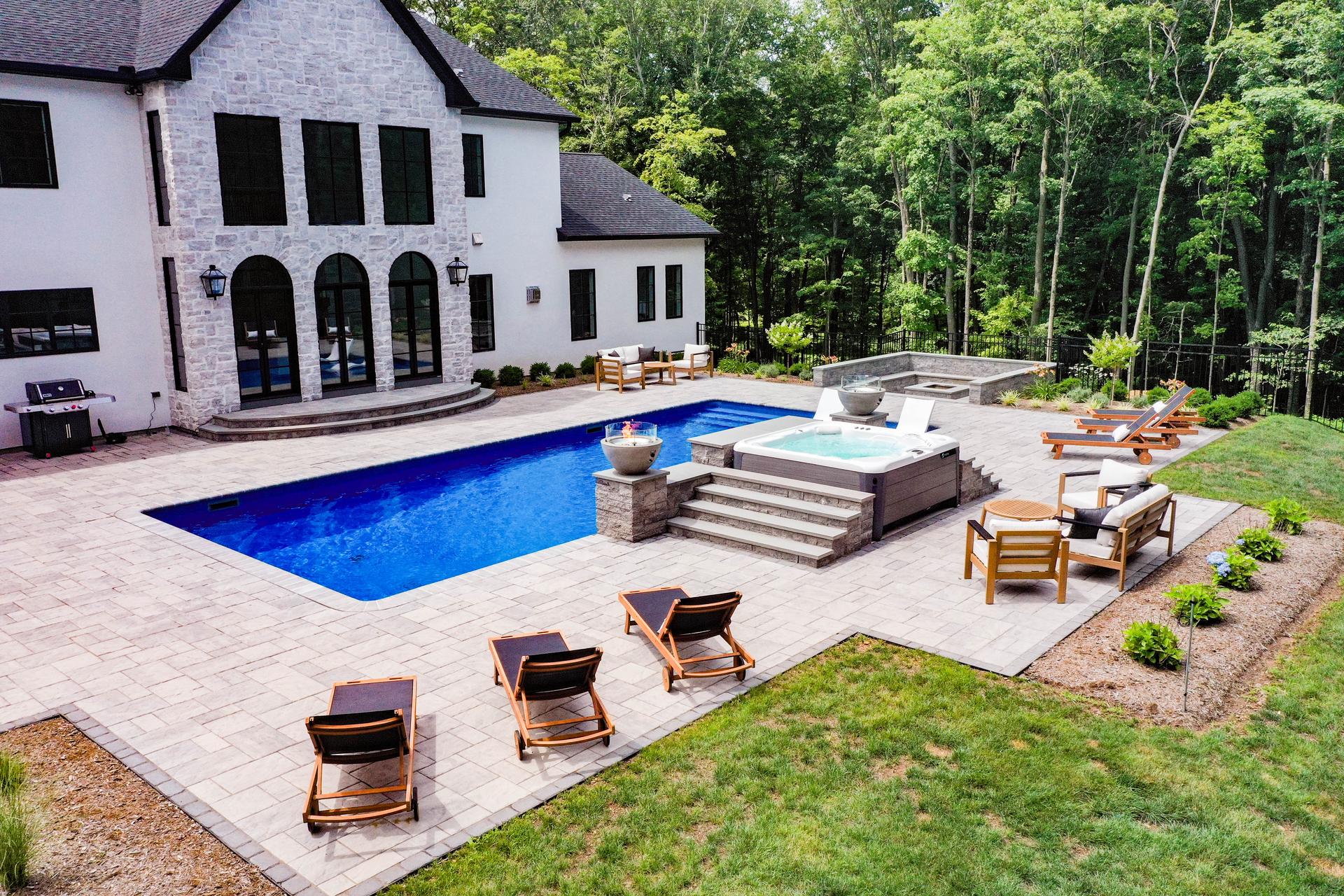
Custom pool patio layout in Connecticut featuring a large rectangular in-ground pool surrounded by light gray paver decking, with three wooden chaise lounges spaced along the pool edge, a raised spa with stone steps and fire bowls
Article Summary
Planning a pool patio layout in Connecticut requires more than choosing stone. You need the right amount of space for walking, lounging, dining, and entertaining. This guide walks through real measurements and layout strategies so you can design a patio that feels comfortable, safe, and built for how you actually use your pool.
What Goes Into Planning a Pool Patio Layout
When you plan your pool patio layout in Connecticut, space should guide every other decision. Layout determines how the patio functions day to day, from walking paths to seating areas and dining zones. Materials and finishes matter, but the foundation of a great pool patio is proper spacing.
A thoughtful layout gives each area a clear purpose and ensures the patio supports how you actually use your pool. We work with homeowners in Durham, Branford, Clinton, East Hampton, East Lyme, Glastonbury, and surrounding areas to design pool patios that balance circulation, comfort, and entertaining space from the start.
Here’s how to approach it step by step.
How Much Space Do You Need Around the Pool
Start with basic perimeter clearance.
Minimum walking clearance around a pool:
-
3 feet is the absolute minimum
-
4 feet is comfortable for circulation
-
6 feet allows room for light furniture placement
If you plan to place chaise lounges directly along the pool edge, you’ll want at least 8 feet of total depth from the waterline outward. That allows space for the chair plus a walking path behind it.
For diving boards or slide areas, allow 8 to 10 feet of clear deck space. That prevents crowding and improves safety.
If your patio only meets minimums, it may feel smaller than the square footage suggests.
How Much Room Do Chaise Lounges Actually Need
Chaise lounges are often the largest furniture pieces on a pool patio. They need more space than most people expect.
Standard chaise dimensions:
-
24 to 30 inches wide
-
72 to 80 inches long
Recommended spacing:
-
30 inches between chairs
-
36 inches behind chairs for walking clearance
-
6 to 8 feet total patio depth when placed along the pool edge
If you plan to angle chaise lounge chairs or cluster them in pairs, increase spacing slightly to maintain flow.
Tight layouts restrict movement and make the space feel busy. Proper spacing keeps the patio comfortable.
How Large Should a Poolside Dining Area Be
Dining zones require full clearance around the table, not just table size.
For a 4-person round or square table:
-
10 by 10 feet minimum
-
36 inches of clearance around the table for chairs
For a 6-person table:
-
12 by 12 feet recommended
For larger entertaining:
-
14 by 16 feet provides flexibility and easier movement
Avoid placing dining areas too close to the pool edge. Keep them slightly removed from splash zones for comfort.
If you’re working through layout options, our pool patio design and installation services can help evaluate how much space your yard realistically supports.
Should You Create Separate Zones on a Pool Patio
In most cases, yes. Zoning improves both flow and comfort. Instead of placing everything in one open area, define purpose-driven spaces.
Common pool patio zones:
-
Lounge zone near the shallow end
-
Dining zone slightly offset from high-splash areas
-
Grill area at least 10 feet from the pool edge
-
Conversation seating around a fire feature or a low wall
Separate zones prevent traffic conflicts. They also make larger patios feel organized rather than scattered.
What Materials Work Best for Pool Patios in Connecticut
Material choice affects safety and comfort as much as appearance.
Bluestone offers a classic New England look and strong durability.
Travertine stays cooler underfoot in hot sun.
Porcelain pavers provide a modern appearance with low maintenance.
Textured natural stone improves slip resistance around water.
In Connecticut’s climate, freeze and thaw cycles matter. Surfaces should handle moisture and temperature swings without cracking or shifting.
If you’re comparing material performance, our custom pool patio design services can help match stone type to your layout, exposure, and long-term maintenance goals.
How to Plan Drainage and Grading Around a Pool
Drainage is not optional. It protects both the patio and the pool structure.
Basic guidelines:
-
Slope patio surfaces 1/8 to 1/4 inch per foot away from the pool
-
Avoid low spots where water can collect
-
Use drainage channels if the grade is limited
-
Direct runoff away from foundations and planting beds
Improper slope leads to pooling, staining, and long-term surface damage.
When you plan your pool patio layout in Connecticut, drainage should be part of the design from the beginning.
Key Takeaways
- A successful pool patio layout starts with accurate spacing measurements.
- Most patios require more clearance than homeowners initially expect.
- Chaise lounges and dining areas need defined dimensions to function comfortably.
- Creating separate zones improves traffic flow and usability.
- Material selection and drainage planning affect long-term performance.
Custom Pool Patio Design and Installation in Connecticut
A well-planned pool patio should feel open, organized, and built for how you use your outdoor space. Proper measurements and thoughtful zoning make the difference between a tight layout and a comfortable one.
If you’re ready to move from ideas to a working design, request a consultation to plan your pool patio layout with experienced stone and landscape professionals.
Contact Torrison Stone & Garden to design and build a custom pool patio that fits your property, your lifestyle, and Connecticut’s climate.