
Hardscape
Hardscaping Around Garden Beds: How to Design Edging and Borders That Last
| Nov 28, 2025
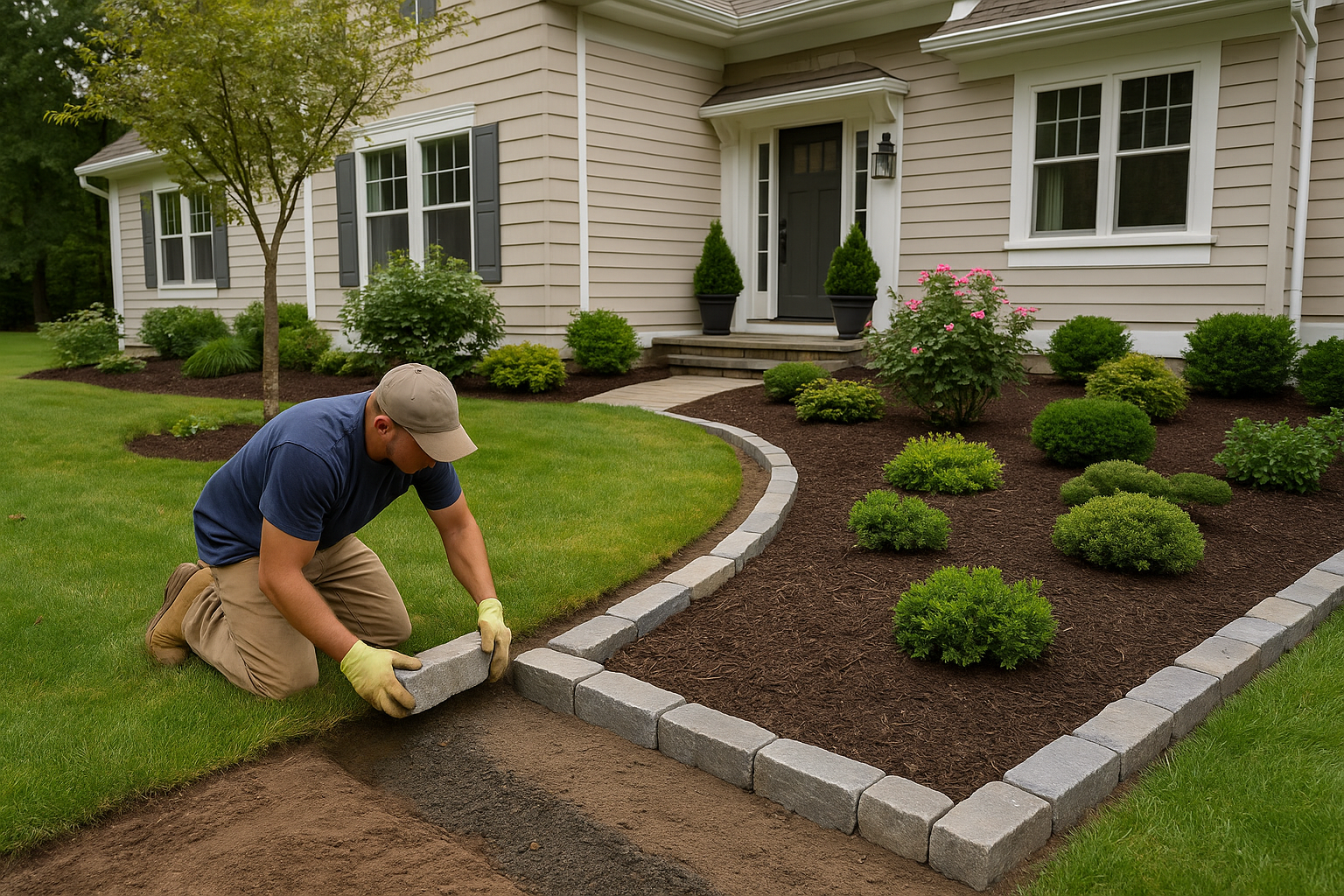
A Connecticut landscaper installs stone edging around a manicured garden bed in front of a beige clapboard-style suburban home. The technician kneels to set a rectangular gray stone along a curved trench bordered with compacted gravel. The surrounding gar
Hardscaping Around Garden Beds: How to Design Edging and Borders That Last
Creating strong, attractive garden bed edging is one of the best ways to define your landscape and protect your investment. In this article, we’ll cover what to consider before starting a hardscaping project, which materials perform best in Connecticut’s climate, how to build borders that last, and simple maintenance tips to keep them looking new.
Why Garden Bed Edging Matters
Garden bed edging does much more than separate plants from grass. It provides structure, prevents erosion, and makes your entire yard look cleaner and more finished. When installed correctly, edging also helps control weeds, keeps mulch in place, and reduces the amount of time spent on upkeep.
Stone borders, in particular, bring balance to your yard by framing planting areas and connecting garden spaces with patios or walkways. A well-designed border adds curb appeal and protects your garden from the effects of Connecticut’s changing weather.
What to Know Before Designing Garden Bed Edging
Before starting any hardscaping project, it’s important to plan carefully. Ask yourself what you want your edging to accomplish. Are you looking for a decorative border, a way to manage drainage, or a structural edge to hold mulch and soil in place?
The layout and slope of your yard will also influence your design. Steeper areas may require deeper edging or small retaining walls, while flat spaces can use simple stone or paver borders. Soil type matters too—clay and sandy soils shift differently over time, which affects how the base is prepared.
Proper grading ensures water flows away from garden beds rather than pooling around plants or stones. If you’re unsure about slope or drainage, our outdoor design and build services in Durham, CT, can evaluate your site and recommend the best approach for stability and long-term performance.
Best Materials for Durable Edging and Borders
Choosing the right material makes all the difference in both appearance and longevity. In Connecticut, freeze-thaw cycles and temperature swings can cause some materials to shift or crack if not installed properly.
Here are a few reliable options to consider:
- Natural Stone: Timeless and versatile, natural stone complements most landscape styles. It offers durability and ages beautifully over time.
- Bluestone or Granite: These premium materials are dense, weather-resistant, and perfect for achieving a high-end finish.
- Pavers: Consistent in size and shape, pavers create clean lines and a polished look. They’re excellent for formal gardens or modern landscapes.
- Decorative Gravel or Cobblestone: Adds texture and contrast around curved beds or along walkways.
The right stone choice depends on your landscape style, maintenance preferences, and budget. Our stone design services help homeowners in Durham and throughout Connecticut select the ideal materials for their project and ensure they’re installed for lasting results.
Steps to Build Long-Lasting Garden Bed Edging
A good plan means little without solid execution. Follow these key steps for edging that stays straight and secure through every season:
- Plan the Layout: Mark the borders of each garden bed, considering curves, angles, and symmetry.
- Excavate the Trench: Dig a trench deep enough to hold the stone base and the first layer of edging material.
- Add and Compact Base Material: Crushed stone or gravel provides drainage and prevents movement. Compact it well to form a strong foundation.
- Install Stones or Pavers: Set materials evenly, using a level to keep a consistent height and alignment.
- Secure the Edging: Fill joints with polymeric sand or mortar to lock pieces in place and deter weed growth.
- Backfill and Finish: Add soil and mulch up to the border, ensuring even coverage for a polished look.
While these steps sound simple, achieving lasting results takes precision. Professional installation from experienced stone and hardscaping experts prevents common problems like uneven lines, settling, or cracking over time.
Blending Hardscaping and Garden Design
Strong garden design ties every outdoor element together. Stone edging should complement surrounding features such as patios, walkways, and planting beds. To achieve a cohesive look:
- Choose stone colors that enhance your home’s exterior and garden palette.
- Use curved borders for natural, flowing gardens and straight lines for modern or formal styles.
- Vary textures and stone sizes for visual interest.
- Consider integrating low landscape lighting along the edge for evening ambiance.
When edging is paired with thoughtful planting design, the result feels seamless. Our garden services can help you select shrubs, perennials, and groundcover that accent your hardscaping while staying low-maintenance and healthy year after year.
Contact Torrison Stone & Garden to combine expert garden design with custom stonework for a unified, durable landscape.
Maintenance Tips to Keep Edging Looking New
Even the best-built edging benefits from occasional maintenance. A few simple tasks each year will protect your investment and keep your yard looking polished:
- Inspect each spring: Look for shifting stones or gaps caused by frost and reset them if needed.
- Refill joints: Add polymeric sand or mortar where it’s washed out to prevent weed growth.
- Level mulch and soil: Maintain a consistent edge height to avoid washout or uneven lines.
- Clean stone surfaces: Remove moss, dirt, or debris that can dull the appearance or cause staining.
Our patio maintenance services include cleaning, sealing, and stone care for patios, walkways, and edging, helping you maintain a cohesive look throughout your outdoor space.
Key Takeaways
- Stone edging defines your garden beds, prevents erosion, and adds visual structure to your yard.
- Material choice and proper installation are key to long-term durability, especially in Connecticut’s climate.
- Combining hardscaping and planting design creates a cohesive, low-maintenance landscape.
- Regular inspections and maintenance protect your investment and keep your outdoor spaces looking sharp.
Expert Stone and Garden Services in Durham, CT
Durable garden bed edging starts with smart design and skilled craftsmanship. The right materials and installation methods ensure your hardscapes stand up to New England weather while enhancing the natural beauty of your landscape.
Our team at Torrison Stone & Garden brings decades of experience in stone design services, garden services, and patio maintenance services to homeowners across Durham, CT and nearby towns including Branford, Clinton, East Hampton, East Lyme, Glastonbury, and Guilford.
Request a consultation for custom garden bed edging and hardscaping in Durham, CT. Contact Torrison Stone & Garden to plan your next outdoor design and build project with expert craftsmanship that lasts.